MAST: Barbara A. Mikulski Archive for Space Telescopes
Map of the Universe from Johns Hopkins University and others.....
Johns Hopkins University (JHU) continues to pad its space community résumé with their interactive map, “The map of the observable Universe”,
 that takes viewers on a 13.7-billion-year-old tour of the cosmos from the present to the moments after the Big Bang.
 While JHU is responsible for creating the site, additional contributions were made by NASA, the European Space Agency,
 the National Science Foundation, and the Sloan Foundation.
JWST's weekly observing schedule:
NASA's Unverse of Learning
An Integrated AstroPhisics STEM Learning and Literacy program
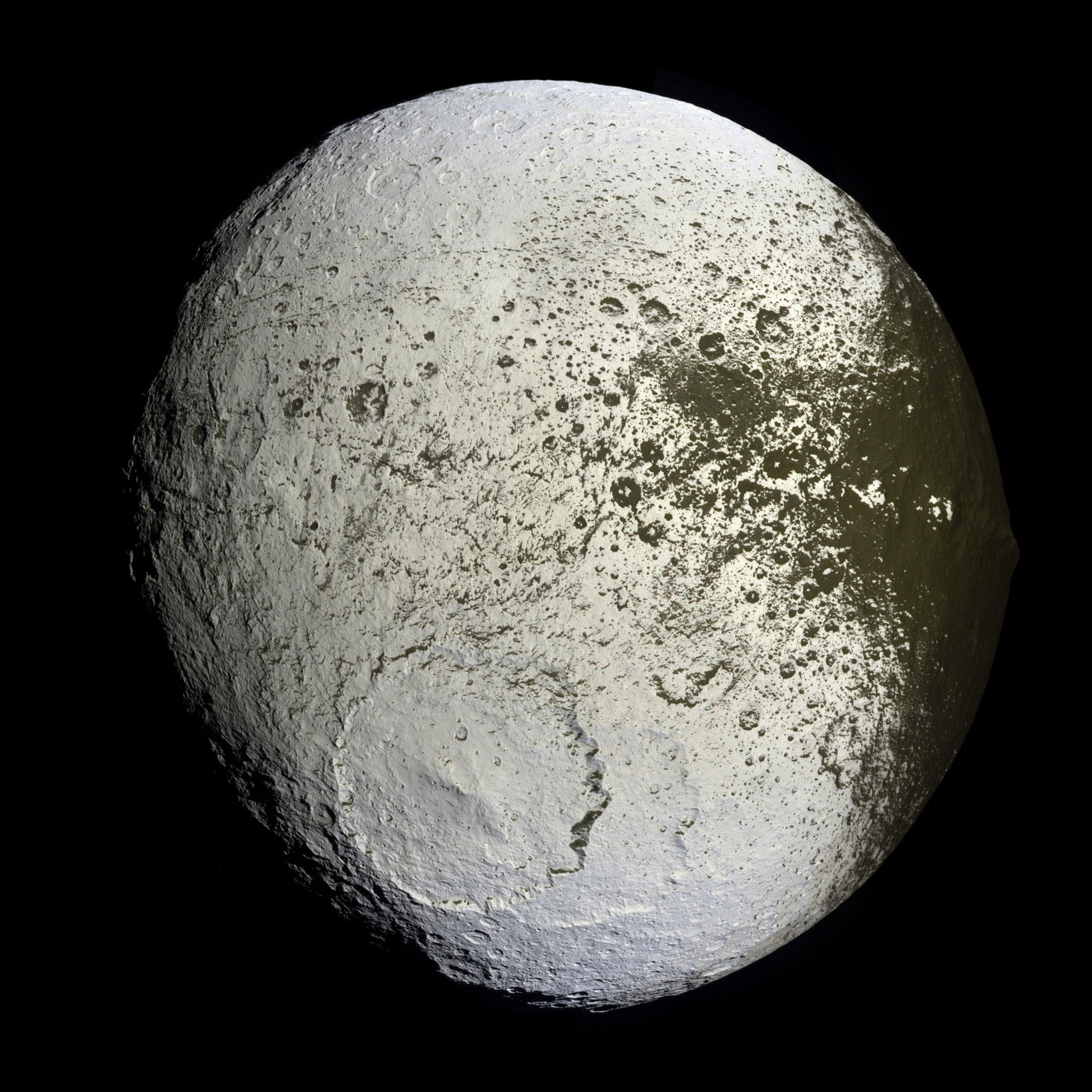
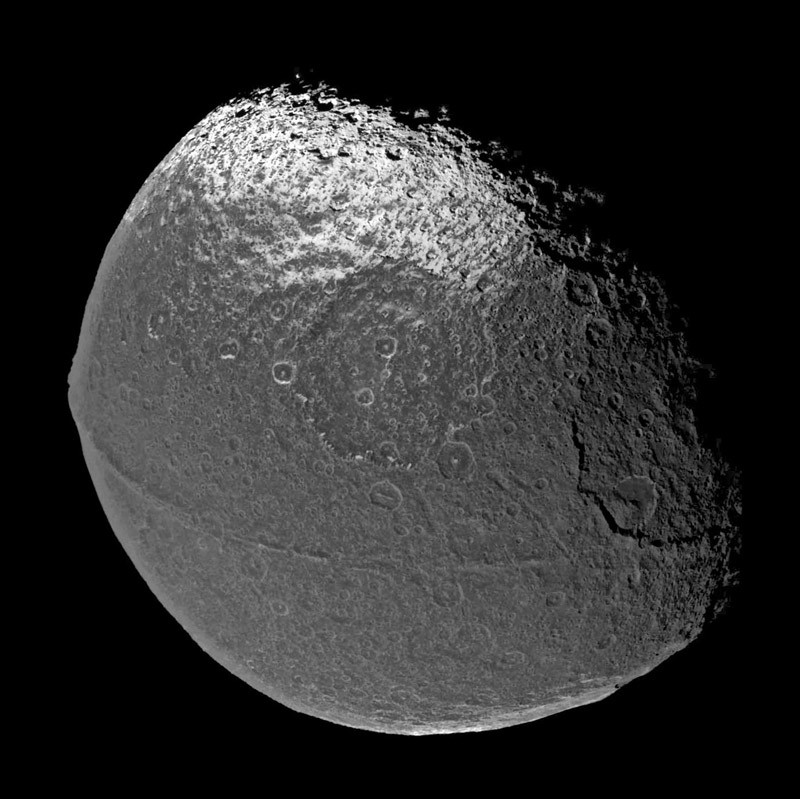
A 300 Year Old Mystery Solved: Why Saturn's Moon Iapetus Is Half-Light, Half-Dark
Image CREDIT: NASA / JPL-Caltech / Space Science Institute / Cassini.

Cassini developed a THEORY about this moon, now known as Iapetus.

He contended that first off, Iapetus must be two-toned, with one side significantly

lighter and brighter than the other, darker side, and that secondly, it must be tidally locked to Saturn,

 so that the same side always faces it. Put this together and the “leading edge” of Iapetus

 would have to be significantly fainter and darker than the trailing edge. If, that is, Cassini was right.
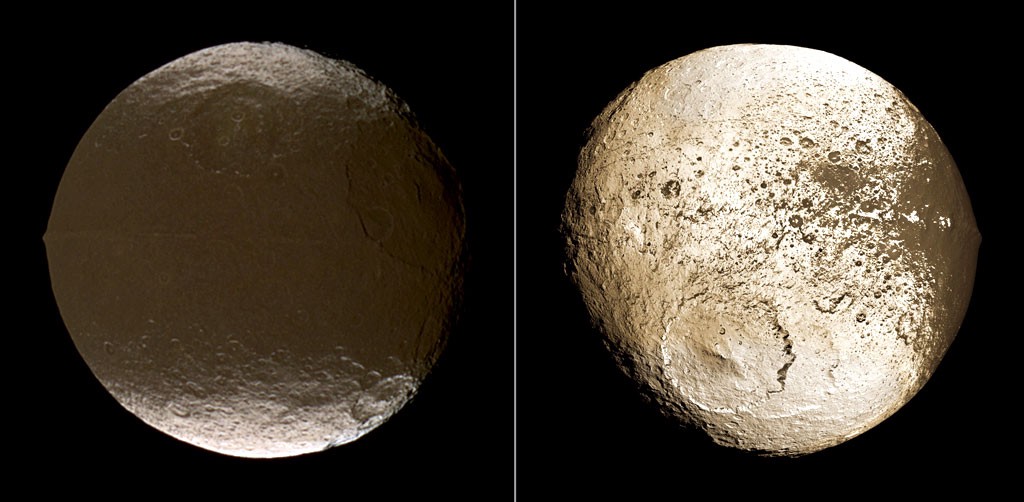
Both Hemispheres of IAPETUS
Image CREDIT: NASA / JPL / Space Science Institute.

Iapetus was very much two-toned, with one hemisphere a factor of ten-to-twenty

times more reflective than the other. The situation was even more severe than Cassini

 himself had ever imagined, as the delineation between light-and-dark hemispheres doesn’t

 perfectly coincide with Iapetus’ orbit.
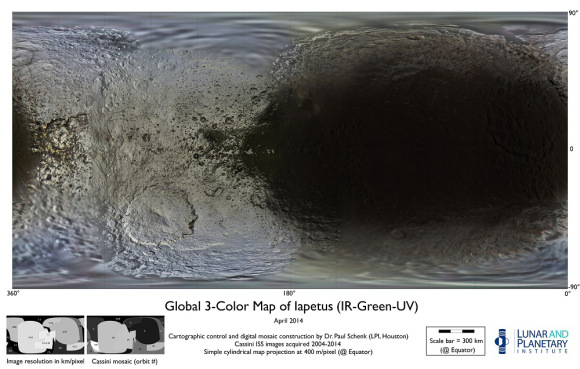
Enhanced-color map of Iapetus, using data collected by the Cassini probe.  The leading hemisphere is at the right.

Credit: NASA/JPL-Caltech/SSI/LPI
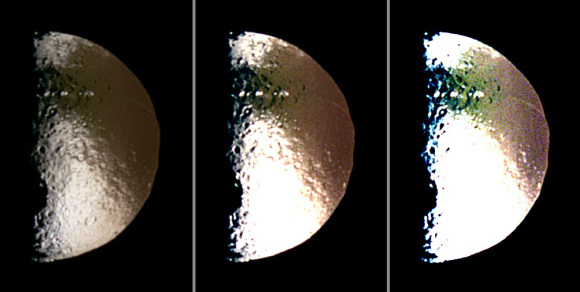
Three different false-color views of Saturn’s moon Iapetus, showing the boundary of the global “color dichotomy”.

Credit: NASA/JPL/Space Science Institute
Saturn’s moon Iapetus, captured by the Cassini space probe on New Year’s Eve 2004.
Credit: NASA/JPL/Space Science Institute.
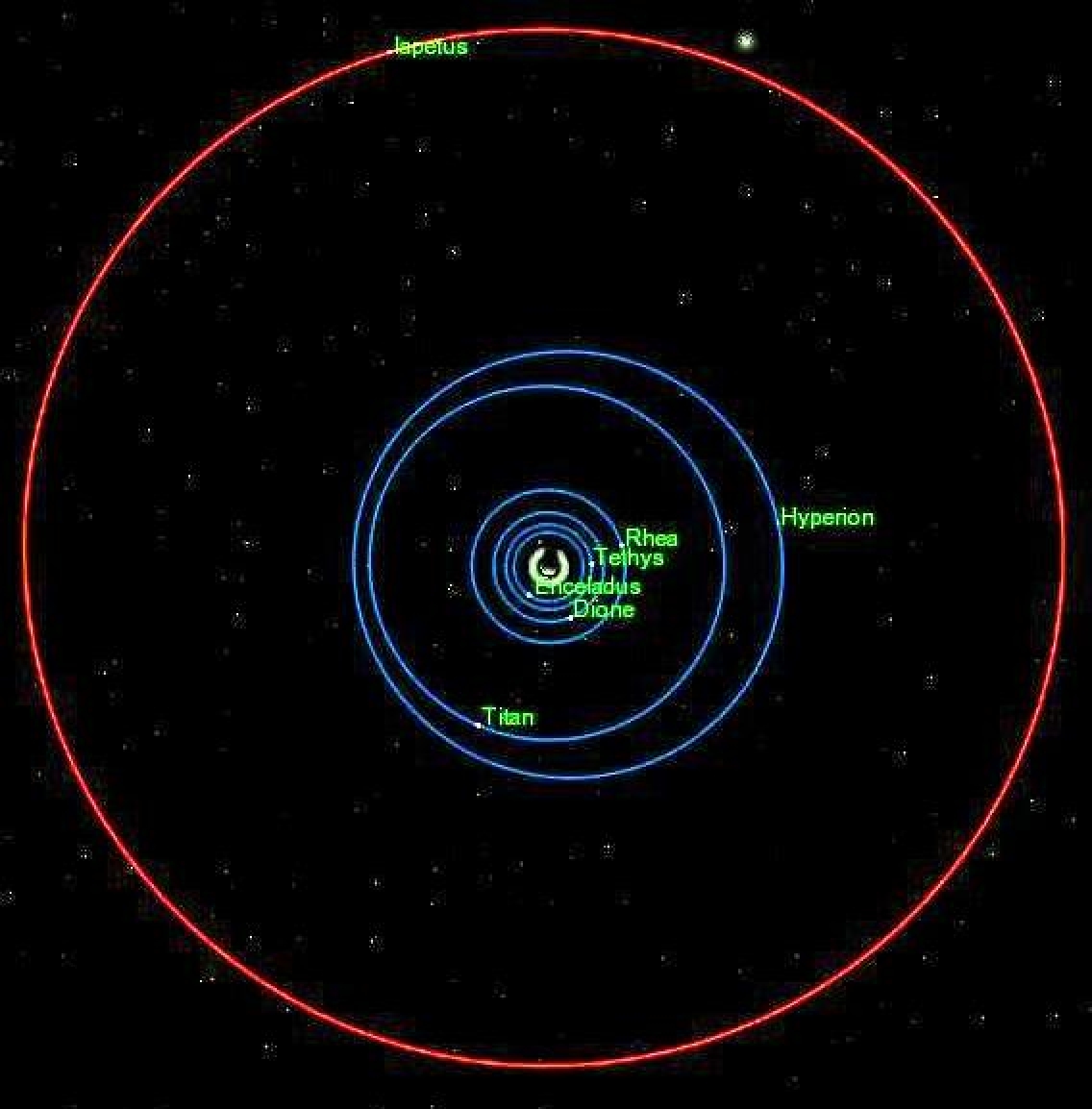
IAPETUS' ORBIT
Image CREDIT: English Wikipedia user The Singing Badger.
Iapetus, you see, is the outermost large moon of Saturn, orbiting twice

as far out as any of Saturn’s other moons. What appears to be some type of

dark debris that collected on the leading side — an effect similar to “bugs on a windshield”

— would be an awfully bizarre explanation, since it’s well outside of the other major players in Saturn’s system,
Iapetus is a small and one of the most mysterious objects in the solar system.
 So here i explain what would standing on this weird moon would be like.

Intro and outro footage made with Space Engine.

Music: Kevin Macleod - Ossuary 5
What’s This Ridge on Iapetus?
Published on Jul 20, 2015
The strangest feature on Iapetus is the equatorial ridge. What could possibly create a feature like this?
Support us at:More stories at:
Follow us on Twitter: @universetoday
Follow us on Tumblr:Like us on Facebook:Instagram -
Twitter resources
Team: Fraser Cain - @fcain
Jason Harmer - @jasoncharmer
Susie Murph - @susiemmurph
Brian Koberlein - @briankoberlein
Chad Weber - weber.chad@gmail.com
Kevin Gill - @kevinmgill
Created by: Fraser Cain and Jason Harmer
Edited by: Chad Weber
Music: Left Spine Down - “X-Ray”
Exploring The Mysteries of Iapetus Up-close - Moon of Saturn
In this video, I take a look at the most puzzling features of Iapetus and see what
 they imply about what could be viewed on its surface.

Intro, outro, and other clips in the video were made with Space Engine.

Music:
1. At the Foot of the Sphinx - Twin Musicom
2. Huma-Huma - Nevada City
3. Kevin MacLeod - Lost Frontier
4. Space Coast - Topher Mohr and Alex Elena
Iapetus Is Currently Smashing Into Saturn's Rings | Our Solar System's Moons
Here is a moon orbiting Saturn that seems to have been assembled the wrong way. One of its sides is
covered in bright regions of ice, while the other is so dark that it looks like it has been burned.
 Its shape is not perfectly spherical, and across its equator is a gigantic mountain range
 that makes this world look like a huge frozen nut lost in space. Its name is Iapetus.
 And the more we look at it, the stranger it becomes.

With a diameter of approximately 1,470 kilometers, Iapetus is the third largest moon of Saturn.
Its surface is ancient, frozen, and marked by enormous craters, some hundreds of kilometers across.
 But none of these features can compete with what immediately catches our attention: its divided appearance.
 There are regions that intensely reflect sunlight and others so dark that they reflect only a small fraction
 of the light they receive. This difference in surface coloration completely baffled 17th-century astronomers
 when the moon was discovered. This is because at certain points in its orbit, Iapetus could be observed.
 In other cases, it simply disappeared from telescopes. At the time, obviously, no one had seen its surface up close,
 no spacecraft existed, and centuries would still pass before we discovered the true reason. Today we know that
 this strange appearance is linked to Iapetus' own dynamics, to the way its surface responds to sunlight,
 and even to the material circulating in the outer regions of Saturn's system. But this only explains part
 of the story. So, to understand how such a strange world managed to form, we need to go back more than 350 years,
 to a time when Iapetus was nothing more than a small point of light that insisted on disappearing before our eyes.
AI-generated video summary
AI can make mistakes, so double-check it.

Ao Infinito e Além explora as características singulares de Jápeto, uma das luas mais intrigantes de Saturno.
Com uma formação equatorial única e um contraste extremo de brilho entre os seus hemisférios, este corpo
celeste continua a desafiar as explicações científicas sobre a sua origem e evolução geológica ao longo
de milhares de milhões de anos.